
Troomi Parent Portal Research
Turning 1,500 customer voices into product direction.
I designed, conducted, and synthesized a large-scale customer survey to understand how families used Troomi, where they experienced friction, and which opportunities could have the greatest impact on the Parent Portal experience.
Role
Senior Product Designer
Focus
User Research · UX Strategy · Data Synthesis
Methods
Survey Design · Quantitative & Qualitative Analysis
Tools
SurveyMonkey · Figma
The challenge
We had product data. What we needed was the customer perspective.
Troomi’s Parent Portal gives parents control over their child’s phone experience—from contacts and apps to restrictions, schedules, monitoring, and other safety features.
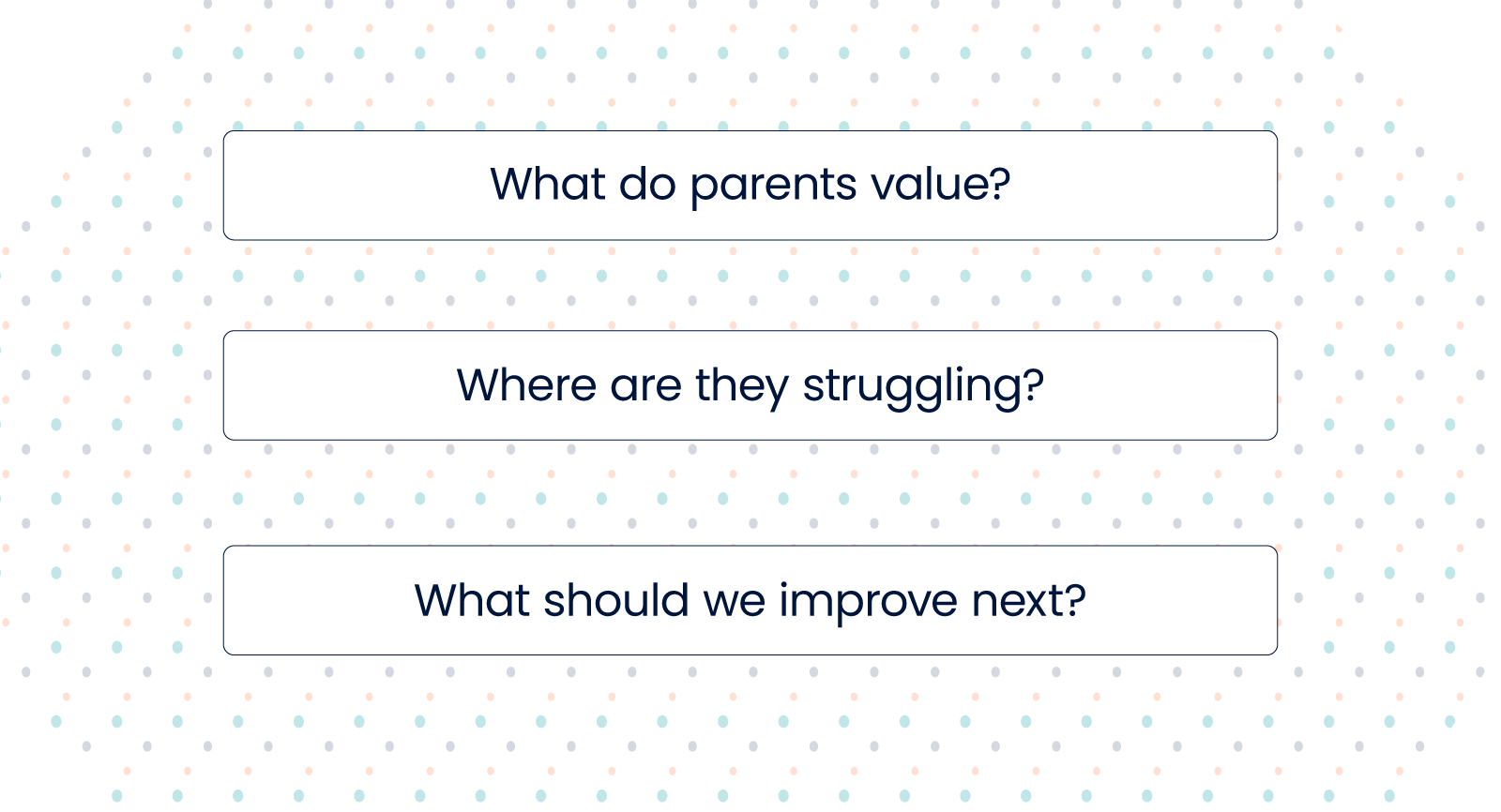
As we considered future improvements to the experience, I wanted to better understand how parents were actually using the product: what was working, what was frustrating, and where changes could make the biggest difference.
Rather than beginning with assumptions about what needed to change, I created a customer survey to gather feedback directly from the families using Troomi.
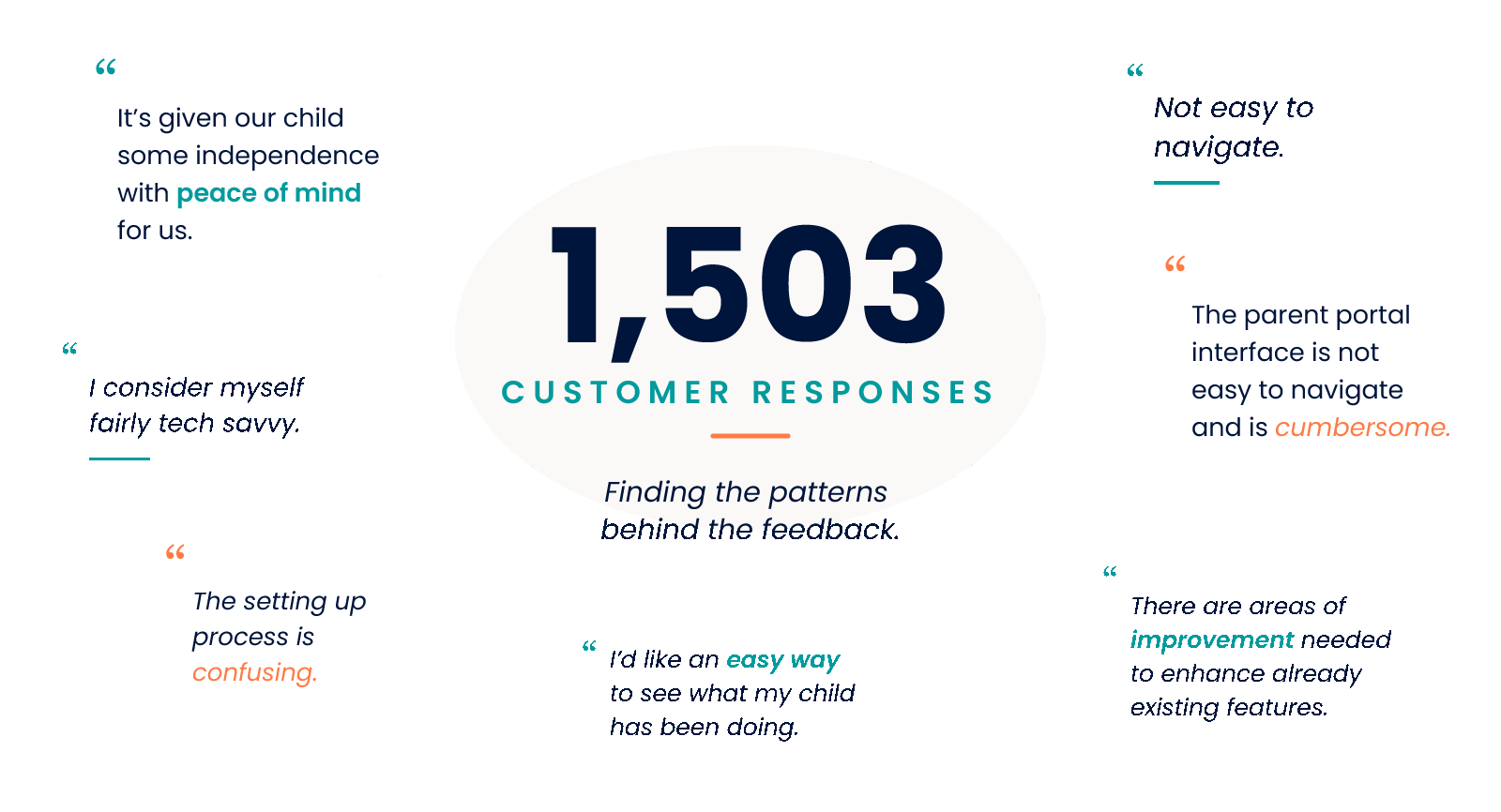
Learning how to approve apps in the Play store was very confusing at first. It took a couple attempts reaching out to support for me to figure it out, and I consider myself fairly tech savvy.
The parent portal interface is not easy to navigate and is cumbersome.
The research
Designing a survey that went beyond satisfaction.
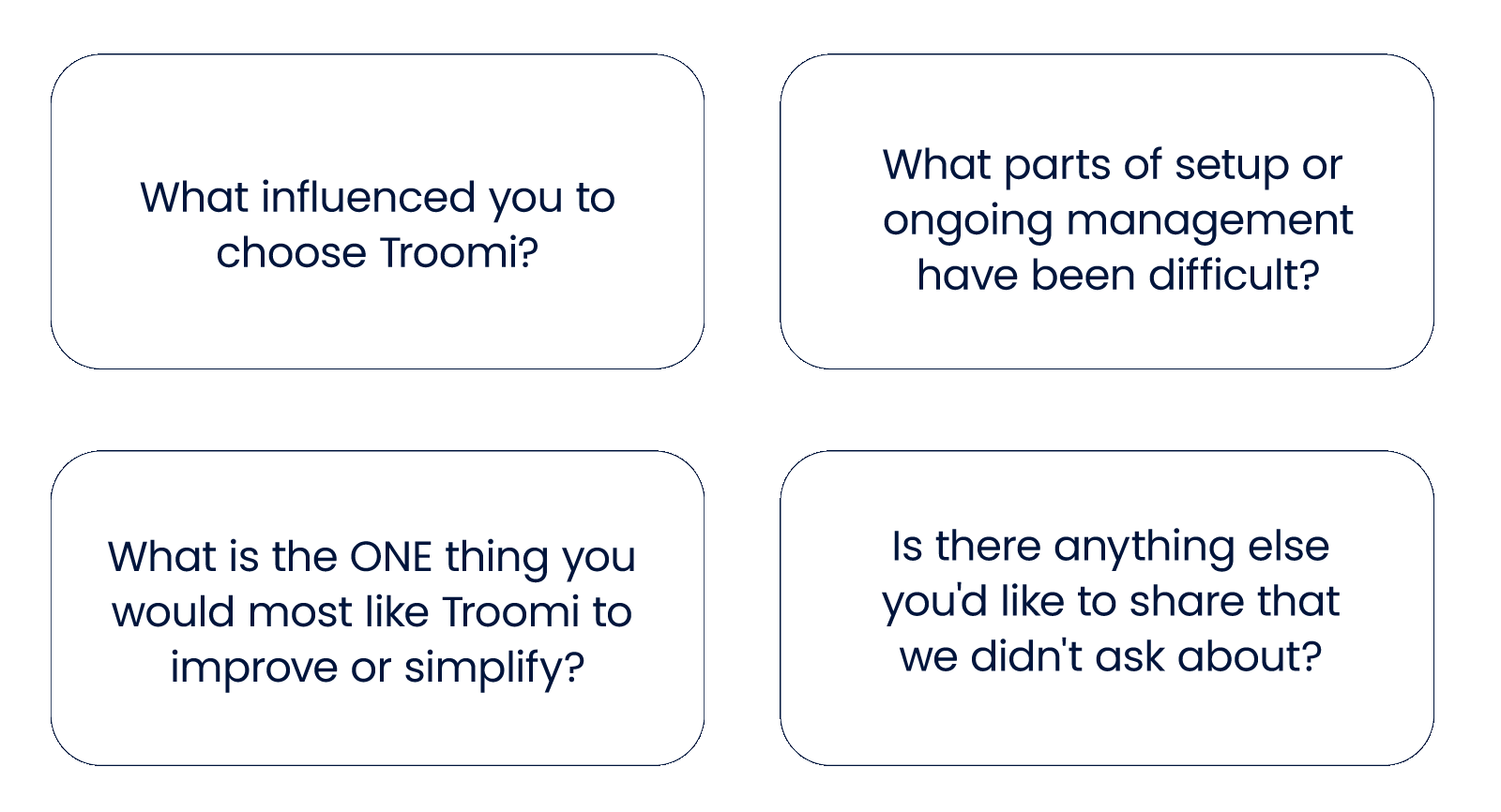
The survey explored the complete customer experience rather than focusing only on individual interface features. Questions covered purchase motivations, onboarding, ongoing Parent Portal management, frequently used features, usability frustrations, product needs, feature requests, and overall satisfaction.
I also included open-ended questions so customers could describe problems and opportunities in their own words.
That combination gave me both quantitative signals and the qualitative context needed to understand why customers were responding the way they were.
The response
1,503 responses.
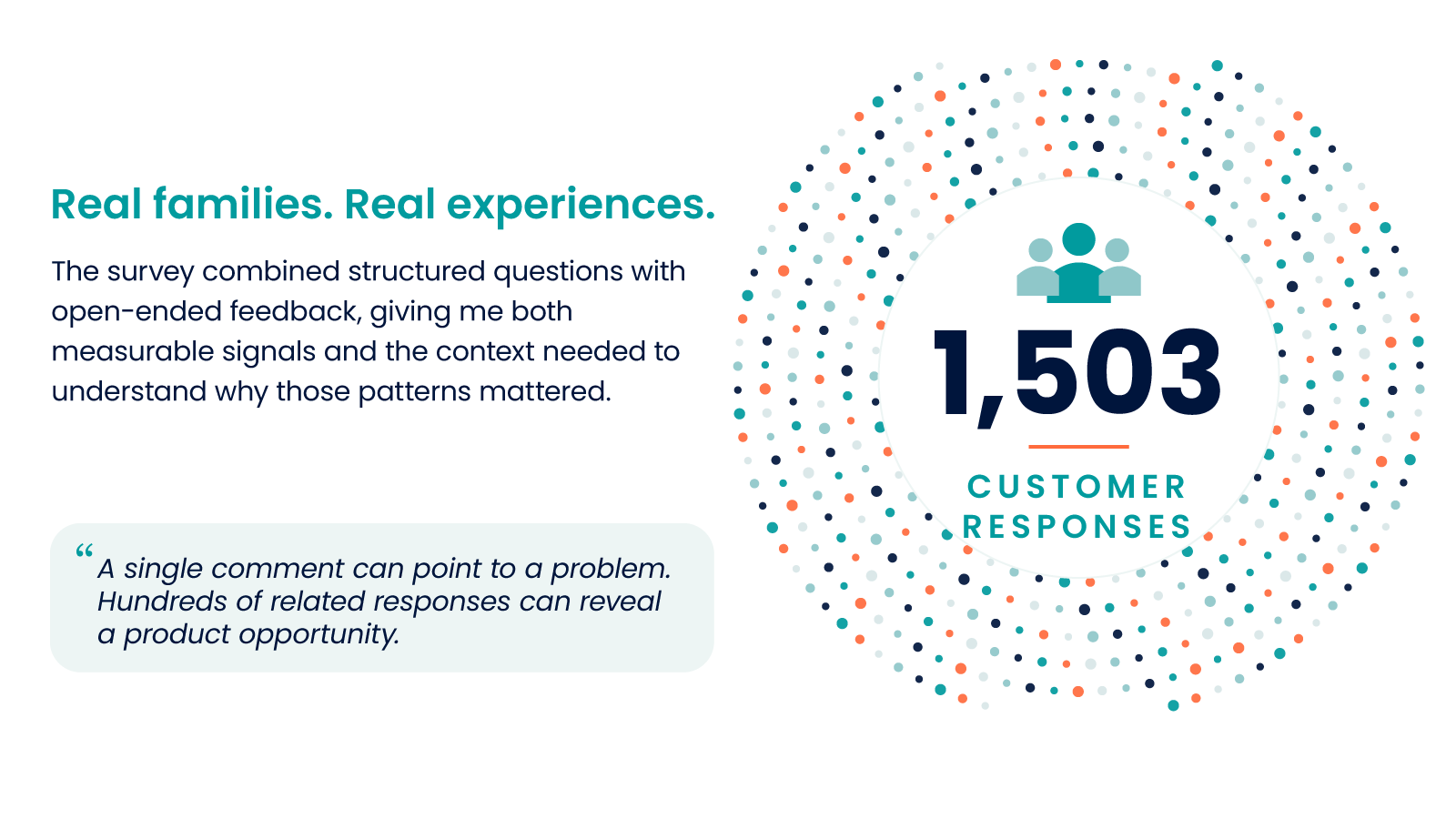
The response gave me a substantial dataset containing both structured survey results and hundreds of written customer comments that needed to be reviewed, categorized, and synthesized into meaningful patterns.
Instead of treating individual complaints as isolated issues, I looked for recurring themes across responses to understand where customer friction was concentrated.
Making sense of the data
Turning hundreds of individual comments into patterns.
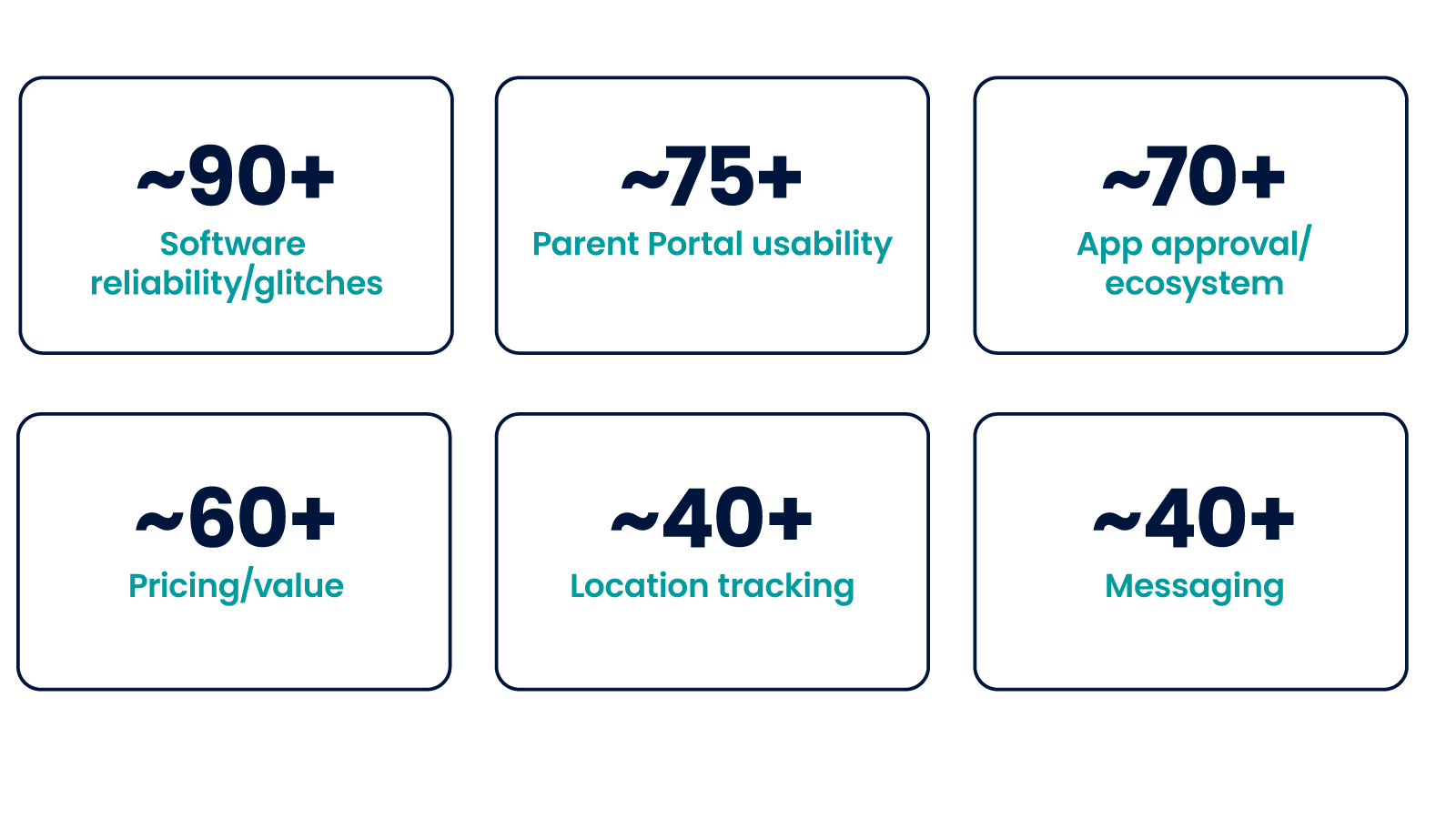
As I analyzed the feedback, recurring themes began to emerge across the customer experience.
I grouped related feedback into major categories and compared the frequency and severity of those themes. This allowed individual comments to become broader product insights that could be communicated to stakeholders and used to inform prioritization.
My analysis identified ten recurring themes across the customer experience, including software reliability, Parent Portal usability, app ecosystem friction, pricing, location tracking, messaging, onboarding, parental controls, hardware, and positive feedback.
The key insight
The Parent Portal was both a reason customers chose Troomi—and one of their biggest sources of friction.
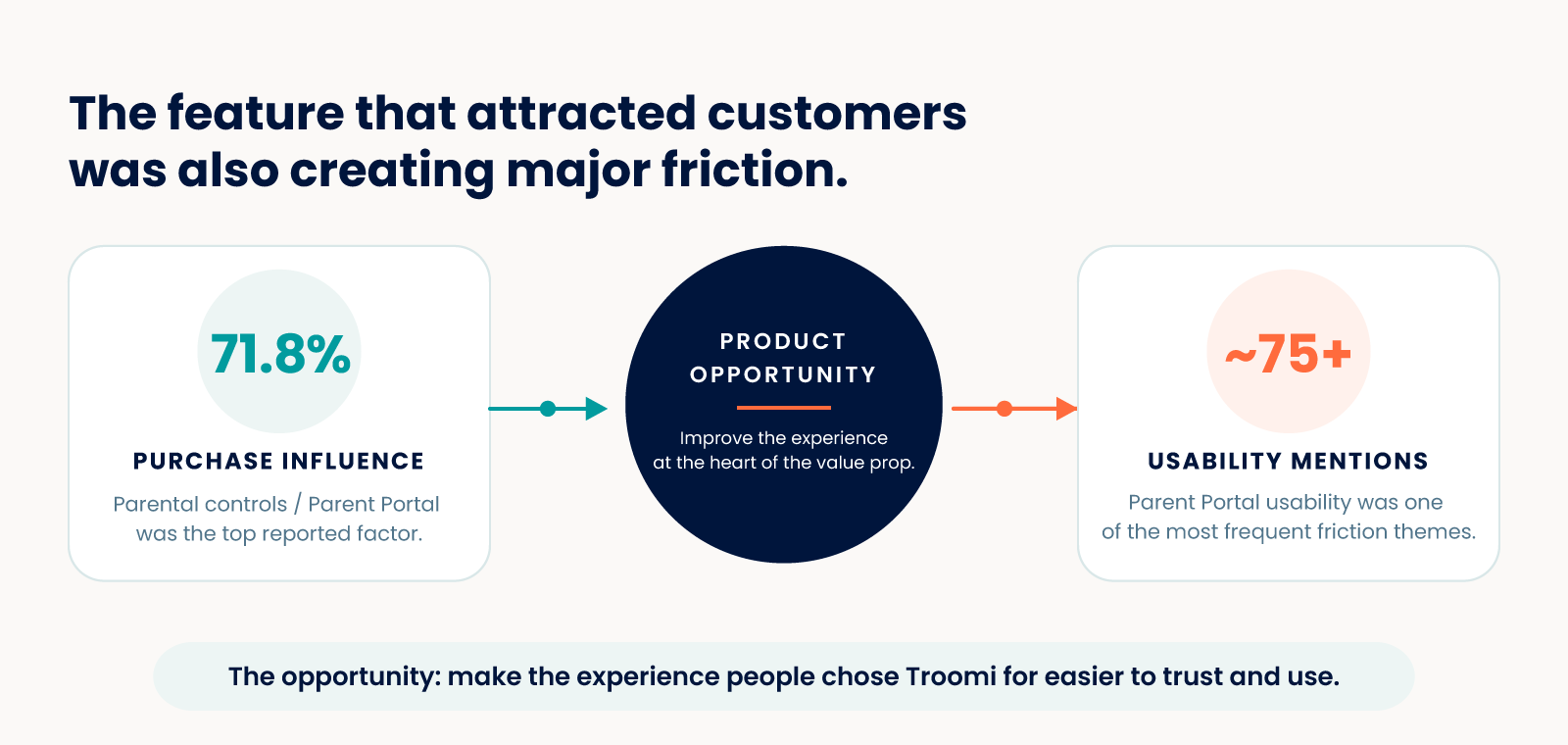
71.8% of respondents selected parental controls/Parent Portal as one of the top three factors influencing their decision to purchase Troomi—the highest reported factor in that question.
Parent Portal usability appeared in 75+ comments in the thematic analysis, making it one of the most frequently reported areas of friction.
That tension presented a significant product opportunity.
Overall we are very happy with our Troomi experience. It’s given our child some independence with peace of mind for us and the option to turn on new features as we decide she’s ready.
What parents were telling us
The problem wasn’t one feature. It was accumulated friction.
Customer feedback pointed to several recurring Parent Portal usability problems:
Confusing navigation
Parents struggled to locate settings and controls.
Slow or unreliable interactions
Changes didn’t always appear immediately and some experiences felt sluggish.
Difficult monitoring
Messages, flagged content and other information could be difficult to review.
Complex management
App approvals, schedules, restrictions and other controls could require too much effort.
Mobile access
Customers repeatedly asked for a dedicated Parent Portal app.
Challenging to update apps. The time limit is difficult. I’d like an easy way to see what my child has been doing on the phone.
After approving a site, I then had to go in and approve every page of a site… while I appreciate the security, it also seemed like a lot of time to approve every potential page that he might click on.
From insight to opportunity
Research gave the team a clearer picture of where product improvements could have the greatest impact.
There is an issue with me not receiving my child’s messages sometimes, and I will only see it by looking at the parent portal…
The parent portal interface is not easy to navigate and is cumbersome. It often duplicates texts or show[s] them out of order.
The findings showed that customers still strongly believed in Troomi’s mission, but usability and reliability problems could undermine that trust.
The research pointed toward three major opportunities:
Improve reliability
Make controls and product behavior feel dependable.
Simplify parent controls
Reduce friction around settings, approvals, schedules and monitoring.
Create a better mobile Parent Portal experience
Customers repeatedly requested a dedicated app and easier access to the controls they use most.
The Outcome
Turning customer research into product direction.
The research gave the team a structured view of customer sentiment across the Troomi experience and transformed more than 1,500 individual responses into identifiable product themes and opportunities.
I evaluated the opportunities against both customer impact and what was technically and organizationally feasible, helping narrow the findings into three priority areas: improving reliability, simplifying parent controls, and creating a better mobile Parent Portal experience.
Those priorities became part of the product roadmap, giving the team a customer-informed foundation for deciding where future Parent Portal improvements could have the greatest impact.
Overall Troomi provides a service that I can stand behind. However, there are areas of improvement needed to enhance already existing features.
What I Learned
Good research doesn’t just identify problems. It helps teams decide which problems matter.
Working through nearly 1,500 customer responses reinforced the importance of looking beyond individual feedback and finding the patterns underneath it. A single complaint can point to a usability issue; hundreds of related experiences can reveal a product opportunity.
The project strengthened my ability to connect customer feedback, product behavior and business priorities—and turn research into direction a cross-functional team can act on.