
Patient Intelligence
Designing flexible journeys through complex healthcare data
As the sole product designer, I transformed complex healthcare requirements and interconnected datasets into a suite of applications that allowed different users to explore the information through customizable journeys.
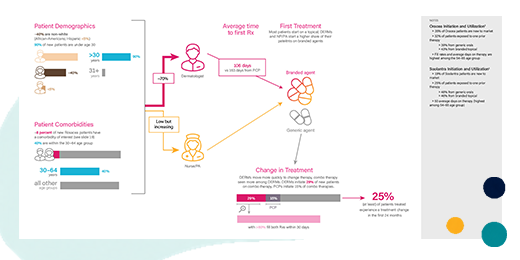
Role
Sole Product Designer
Focus
UX · Interaction Design · Data Visualization
Team
Product · Business Analysis · Engineering
Tools
Adobe XD · HTML/CSS
The challenge
One platform. Different questions.
Patient Intelligence was designed as a suite rather than a single analytics experience. Each application approached the underlying healthcare data from a different perspective—from understanding patient touchpoints to treatment progression, adherence, payer influence, and market behavior.
Different roles came to the platform with different questions. A brand manager evaluating treatment performance might need a very different view of the data than an analyst investigating patient populations or treatment patterns. The experience needed to support those different goals without creating a completely separate product for every user.
The challenge wasn’t creating one way to understand the data. It was creating a system flexible enough to support many ways of understanding it.
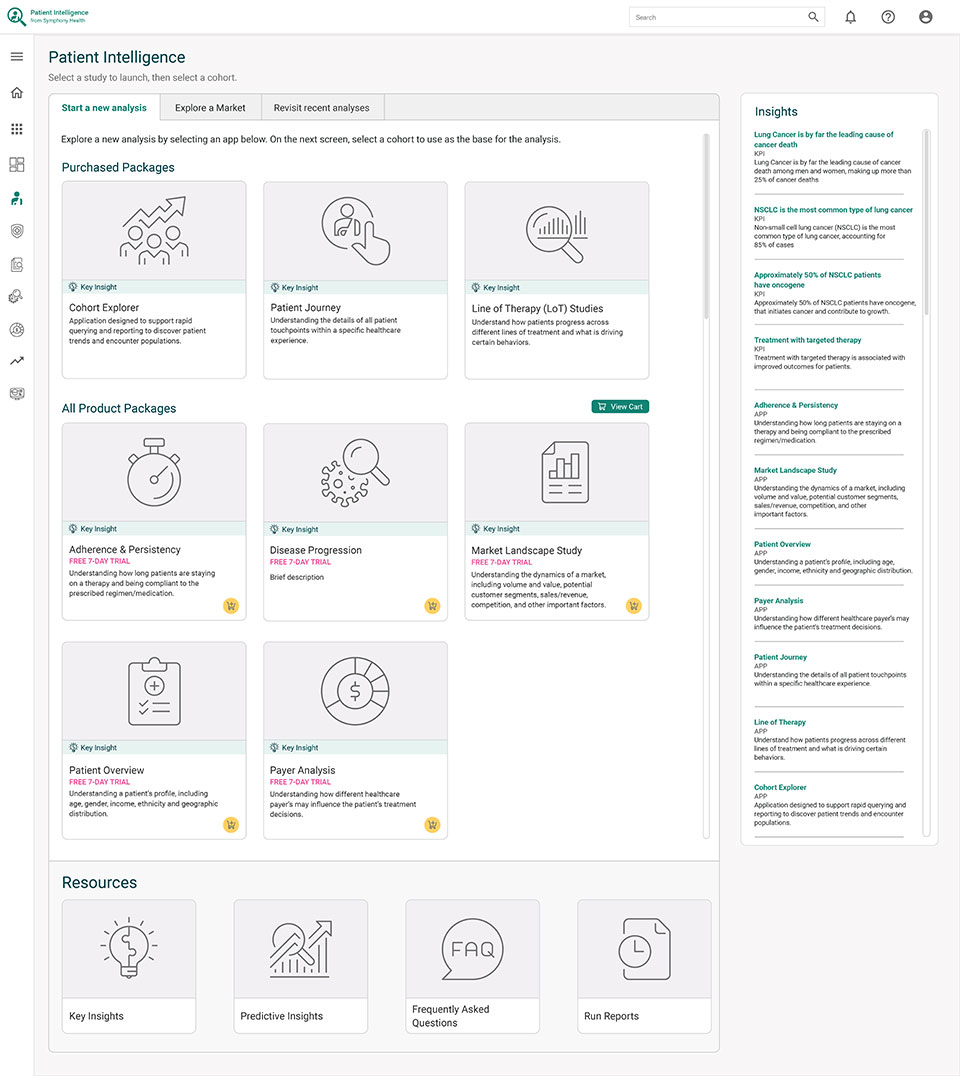
Cohort Explorer → Patient Journey → Line of Therapy → Adherence & Persistency → Payer Analysis → Market Landscape
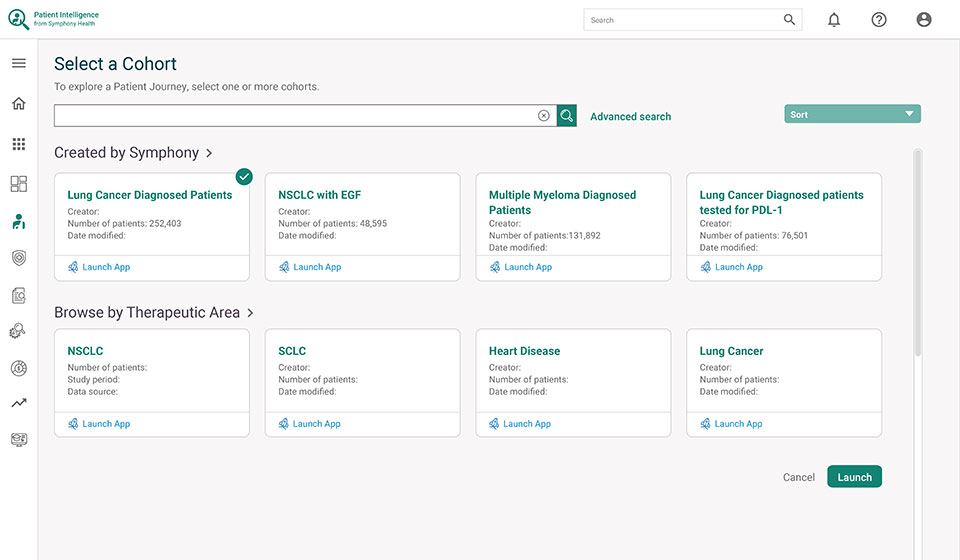
Start with the population. Then ask the question.
Rather than forcing users into a predetermined report, the experience began with the population they wanted to understand. Users could search or browse cohorts, then tailor their analysis through dimensions such as comorbidities, lines of therapy, demographics, medications, and treatment patterns before moving into the analytical experience that best matched their question.
Select application → Choose cohort → Explore dimensions → Refine the data → Discover insights
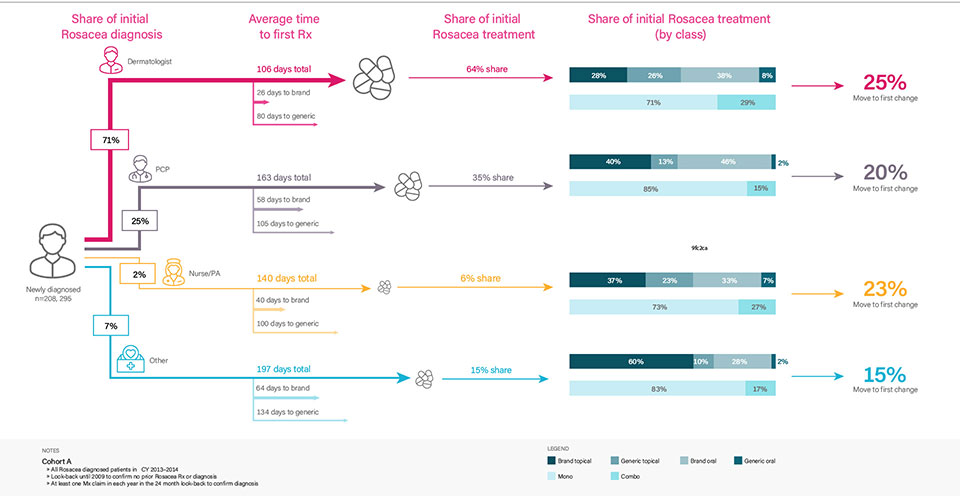
Turning healthcare complexity into something people could explore.
Healthcare journeys aren’t linear. A single analysis could involve patient demographics, comorbidities, practitioners, medications, treatment timing, switching behavior, and multiple cohorts. My challenge was preserving that complexity while creating an interface users could understand and manipulate.
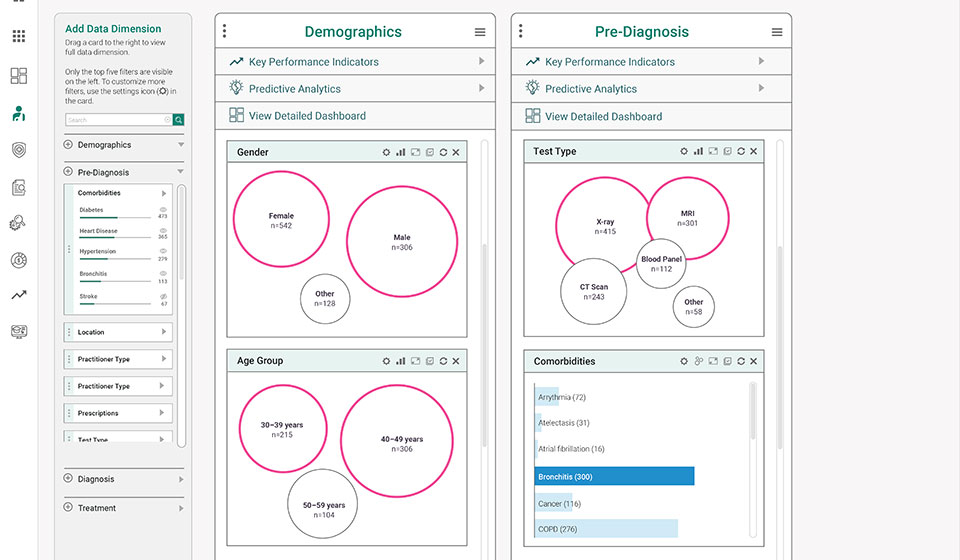
Explore the data without rebuilding the query.
I designed a card-based interaction model that allowed users to progressively build an analysis. Instead of confronting users with every available variable at once, dimensions could be added as they became relevant to the question being explored.
Drag to explore
Move a data dimension into the workspace rather than configuring a complex report upfront.
Progressive disclosure
Expose the most useful filters first while keeping additional controls available when needed.
Build on discoveries
Add dimensions, create panels, or launch another application without abandoning the cohort being explored.
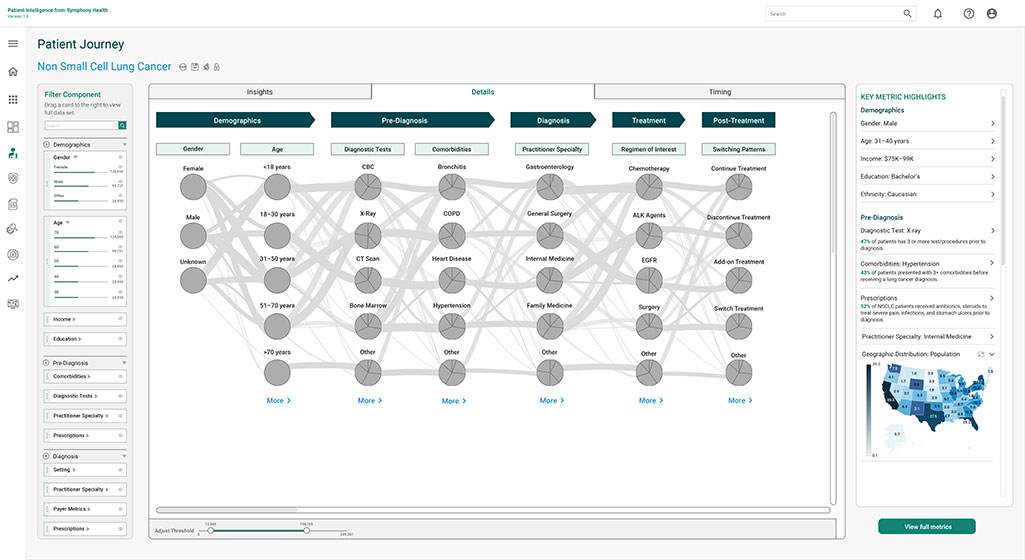
Turn data into a journey.
Patient Journey reorganized disconnected healthcare data around the progression of a patient’s experience. Users could move from demographics through pre-diagnosis, diagnosis, treatment and post-treatment while changing the dimensions that mattered to their analysis.
Same dataset. Different path. Different insight.
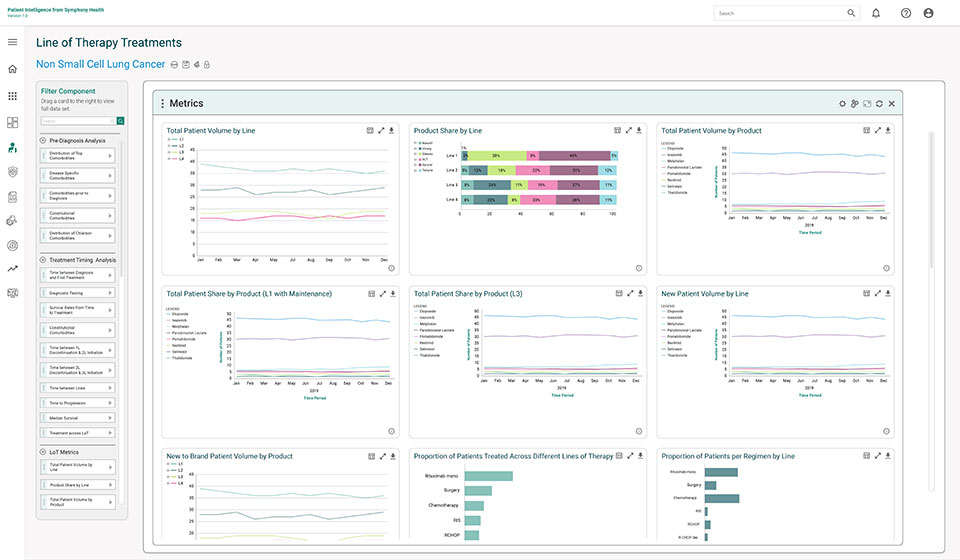
A shared interaction model across specialized applications.
Each application answered a different healthcare question, but users shouldn’t have to learn an entirely new interface every time they changed analyses. I carried common interaction patterns across the suite while allowing each application to surface the metrics and workflows specific to its purpose.
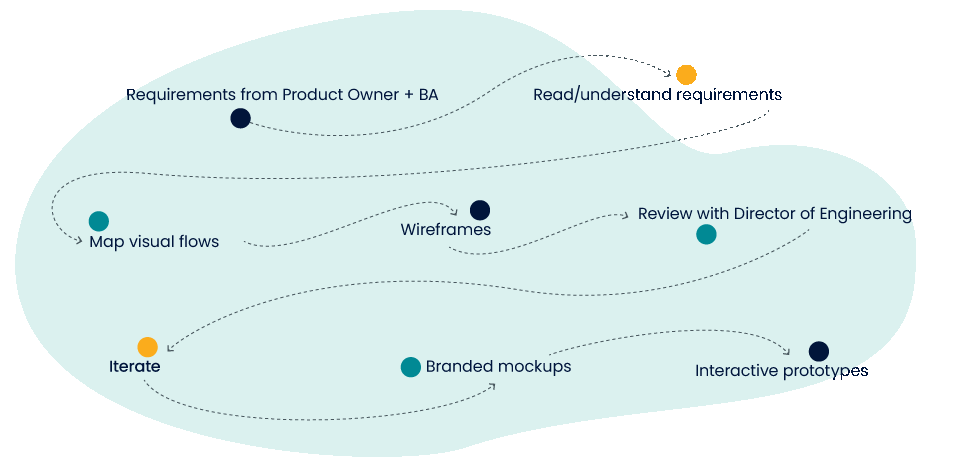
Translating requirements into interaction.
Research and domain requirements were provided by the Product Owner and Business Analyst. My role was to translate those requirements into usable interaction models. I worked through flows and wireframes first, reviewed them with my Director of Engineering, and then developed approved concepts into branded interfaces and interactive prototypes.
The Outcome
The product progressed through design and interactive prototyping before organizational funding priorities changed and development was discontinued prior to launch. While I don’t have post-launch metrics, the work established a cohesive interaction framework for navigating complex healthcare datasets across multiple applications.
What I Learned
Complexity doesn’t always need to be simplified.
Sometimes it needs to be structured. Patient Intelligence reinforced one of the principles that continues to shape my work: good product design doesn’t hide complexity from users who need it. It gives them a clear way to navigate it.